Dental Fake Tooth Options: Implants, Bridges, & More!

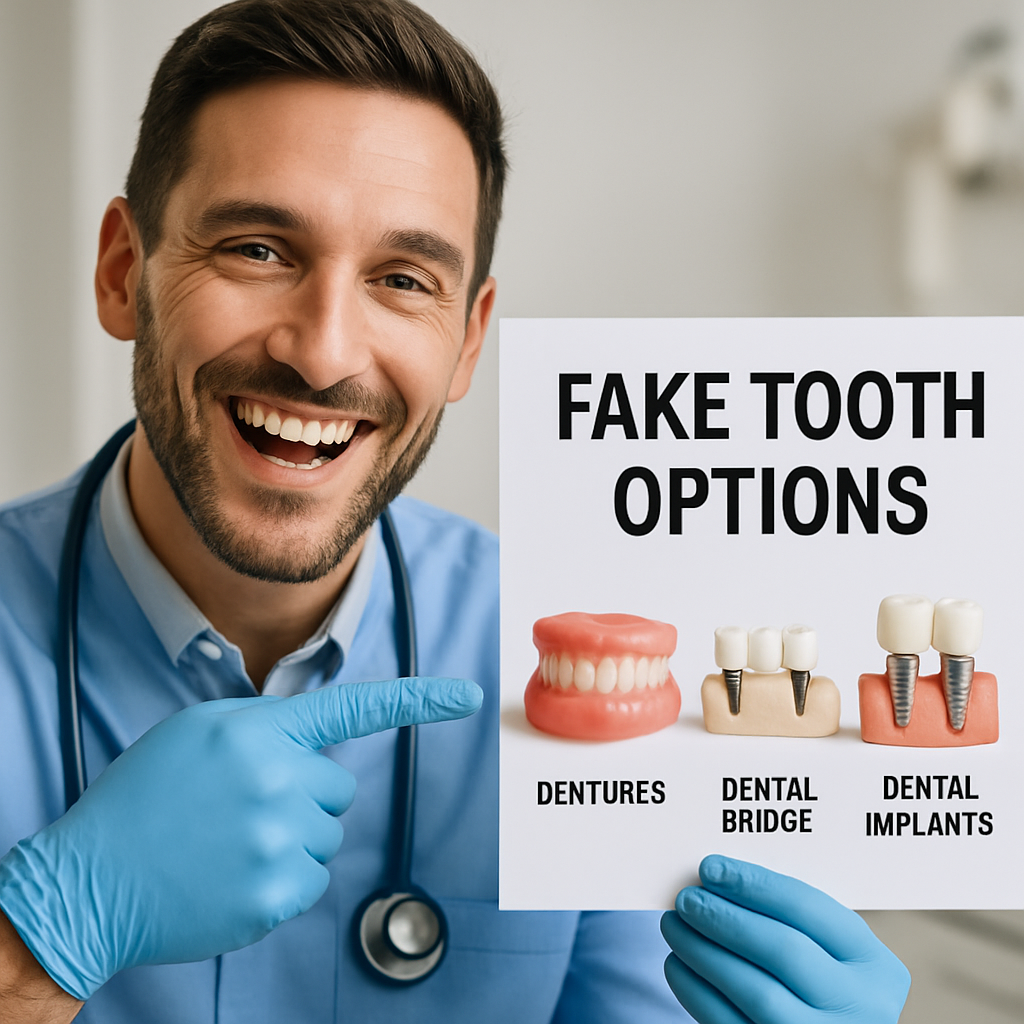
Close up image of a dentist smiling and pointing to a set of replacement teeth options, including dentures, a dental bridge and dental implants, with text saying "Fake Tooth Options".

A dental fake tooth replaces a missing natural tooth to restore chewing, speech, and the look of your smile. People choose a dental fake tooth for function, to prevent nearby teeth from shifting, and to boost confidence. This post covers the main options—implants, fixed bridges, dentures, and temporary solutions—so you can compare pros, cons, and what to expect.

Common dental fake tooth options

Dental implants

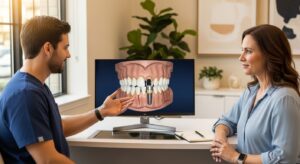
A dental implant has three parts: the titanium implant placed in the jaw, an abutment that connects the implant to the crown, and a crown that looks like a tooth. Implants offer strong, stable biting and help preserve bone. Ideal candidates for a dental fake tooth in Pasadena are people with good gum health and enough jawbone, or who are willing to have bone grafting.

Fixed dental bridges

A fixed bridge uses the teeth next to the gap as anchors. The fake tooth (or teeth) sits between crowns on those anchor teeth. Bridges work well when implants aren’t possible or when you want a quicker solution. Downsides: nearby healthy teeth must be shaped, and bridges don’t stop bone loss as implants do.

Removable dentures & partials

Full dentures replace all teeth in an arch; partials fill gaps when some natural teeth remain. Dentures can be more affordable and faster than implants, but they may shift while eating or speaking and need regular relining and care. For many, a dental fake tooth in Burbank as a partial is a practical, budget-friendly option.

Temporary options: flippers & resin-bonded bridges

Flippers are lightweight, removable false teeth used temporarily. Resin-bonded (Maryland) bridges attach a fake tooth to adjacent teeth with minimal prep. Both are lower-cost options that serve well while you wait for a permanent dental fake tooth in Glendale or during healing.

How to choose the right dental fake tooth

Oral health and bone structure

Healthy gums and enough bone are key to implants. If bone is low, grafting can help. Bridges need strong neighboring teeth. Dentures work when many teeth are missing, but require healthy gums for support.

Longevity and maintenance needs

Implants often last decades with good care. Bridges last 7–15 years and may need to be replaced. Dentures usually need relines and replacement every 5–8 years. Consider daily cleaning and regular dental visits for any dental fake tooth.

Budget, insurance, and timelines

Implants have higher upfront costs but long-term value. Bridges cost less up front and are faster to build. Dentures are the most affordable initially. Check insurance limits and ask about financing or payment plans.

What to expect during treatment and recovery

Implant procedure & healing timeline

Implants usually require surgery to place the implant, several months of healing for the bone to fuse, and then the crown. Expect mild swelling and short recovery; follow your dentist’s care instructions.

Bridge preparation & fitting

Bridges need the anchor teeth reshaped, impressions or scans, and a temporary while the final bridge is made. Fitting usually takes a few visits.

Care at home

Brush and floss daily; use interdental brushes for implants and bridges. Denture wearers should clean their devices and soak them overnight. Keep regular check-ups for adjustments and hygiene.

Costs & payment options for a dental fake tooth

General ranges: implants (surgical implant + crown) $3,000–$6,000+, bridges $1,000–$2,500 per tooth, dentures $600–$3,000. Many offices offer financing, in-house plans, or third-party lenders to spread payments.

Why choose Signature Smiles for your dental fake tooth

Advanced technology for precise results

Signature Smiles uses CBCT 3D imaging, iTero scanners, intraoral cameras, dental lasers, and in-house 3D printing for accurate planning and faster results.

Concierge-style care and flexible financing

Expect a spa-like, personalized visit, along with payment options designed to make implant and restorative care more accessible.

About Dr. David Shirinian

Dr. David Shirinian is a USC-trained dentist and a fellow of AAID and ICOI, focused on cosmetic and implant care with a patient-first approach.

How to get started

Call or book online for a consultation. Bring a list of medications, dental history, and recent X-rays if available. The first visit includes an exam, imaging, and a clear treatment plan. Ready to find the right dental fake tooth for your smile? Schedule a consultation to review options and create a plan that fits your goals and budget.

Share:

More Posts

Judgment-Free, High-Quality Dentistry is Possible

Experience it for yourself!