If you’ve searched “what is a tooth implant,” this guide explains the basics in plain language so you can decide if implants might be right for you.
What Is A Tooth Implant?
A dental implant is a small artificial root placed in the jaw to support a replacement tooth. Implants are used when a natural tooth is missing or must be removed, and you want a long-term, natural-feeling replacement.
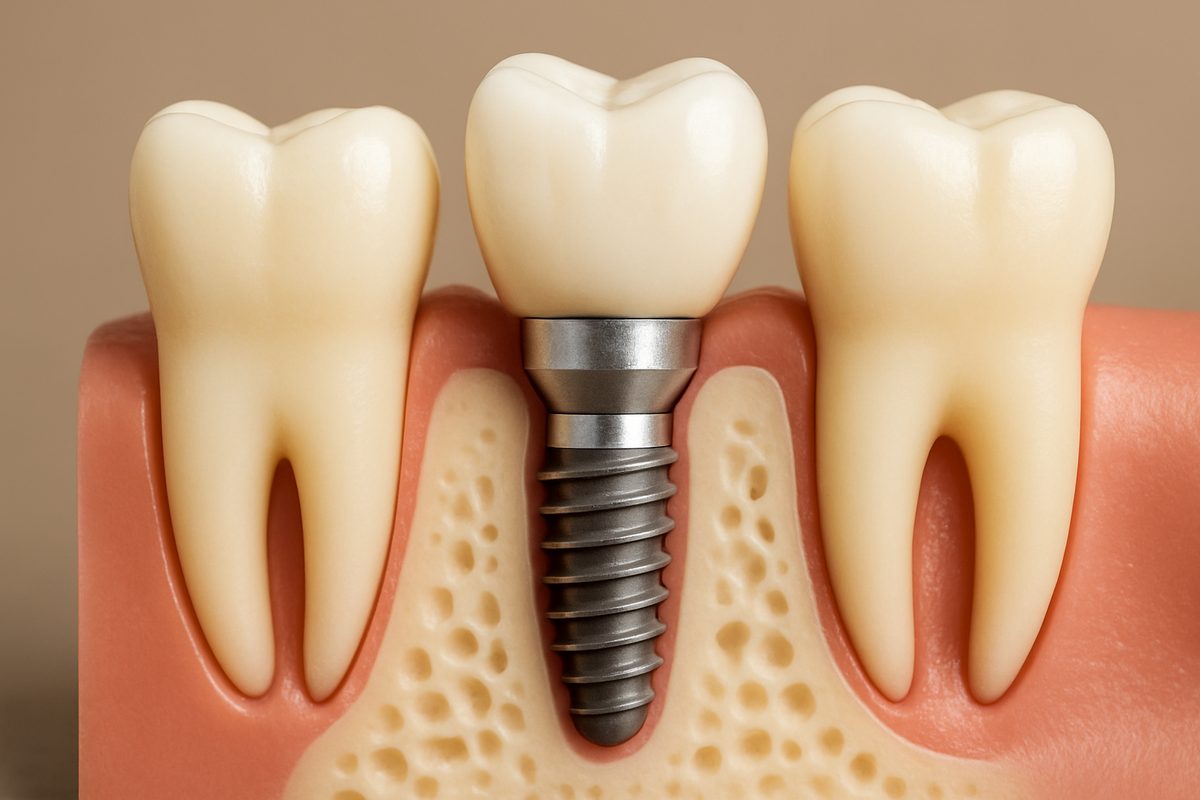
Key Parts Of a Dental Implant
The implant post (root)
The implant post is usually made of titanium or zirconia and acts as a tooth root. It is surgically placed into the jawbone and bonds with the bone in a process called osseointegration to create a stable base.
The abutment
The abutment is a connector piece that screws onto the implant post. It links the post to the crown and sits just above the gum line to support the visible portion of the tooth.
The crown (replacement tooth)
The crown is the visible part that looks like a natural tooth. Crowns are made from porcelain or ceramic and are matched for color and shape so you can chew and smile normally.
Who Is A Good Candidate?
Good candidates are generally healthy adults with enough jawbone, healthy gums, and no uncontrolled medical issues. Non-smokers heal better, and patients should have realistic expectations about time and cost. If the bone is low, grafting can often make implants possible.
The Typical Implant Timeline
Consultation and planning
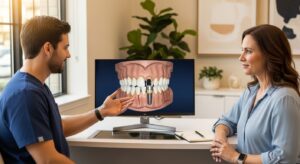
Your dentist will perform an exam, X-rays, CBCT 3D imaging, and digital scans to develop a treatment plan. This step maps nerves, sinuses, and bone, ensuring safe, precise placement.
Surgery and healing
The implant post is placed during a minor surgery. Healing and osseointegration usually take several months. Expect some swelling and mild discomfort that a dentist can manage with medication and care instructions.
Final restoration
Once healed, the abutment and crown are placed. The dentist checks your bite, fit, and appearance and makes adjustments so the tooth looks and works like your natural teeth.
Benefits And Potential Risks
Implants restore chewing function, preserve jawbone, and offer durable, natural-looking results. Risks include infection, implant failure, or nerve and sinus issues. Proper planning, experienced clinicians, and good oral hygiene greatly reduce these risks.
How Modern Technology Improves Outcomes
CBCT 3D imaging, digital scanners like iTero, intraoral cameras, and in-house 3D printing improve accuracy and predictability. These tools let dentists plan virtually, place implants precisely, and create restorations that fit better and look more natural.
Cost, Insurance, And Financing Basics
Cost varies with the number of implants, the need for grafting, and the materials. Some dental plans offer partial coverage, but many do not cover implants fully. Practices commonly provide payment plans and third-party financing to spread costs.
How To Choose An Implant Dentist
Ask about training and memberships (AAID, ICOI, AACD), case examples, technology used, follow-up care, and success rates. Look for clear before-and-after photos and patient reviews that show consistent, high-quality results.
About Signature Smiles Dental Group & Dr. David Shirinian
Signature Smiles Dental Group offers concierge-style implant and cosmetic care in Pasadena, Burbank, and Glendale, CA. Dr. David Shirinian is fellowship-trained in implant dentistry and combines advanced tech with personalized care and financing options.
Next Steps — Book A Consultation
If you’re wondering whether an implant could replace a missing tooth, schedule an exam to review your bone health and goals. A personalized plan will outline options, timeline, and cost so you can move forward with confidence.