If you are weighing dental implants, one of the first questions is usually the same: how long do dental implants last? It is a fair thing to ask before an investment of this size, and we hear it often at our office in Pasadena on East Colorado Boulevard, from neighbors in Hastings Ranch and across Old Pasadena. The honest answer is encouraging, with a few details worth understanding before you decide.
How long do dental implants last? A typical range
Dental implants are designed as a long-term replacement for missing teeth. When they are placed well and cared for properly, the implant post can often last for decades, while the crown on top commonly lasts around 10 to 15 years before it may need replacing. Treat that as a general guide, not a promise. Individual results vary with health, habits, and care.
An implant is made of separate parts that wear differently, and we explain each of them below.
What influences how long implants last
Most of what shapes an implant’s lifespan comes down to the health of the tissues around it and the habits that protect them. When people ask how long dental implants last, these factors usually explain the difference from one person to the next. Mayo Clinic explains that implant placement depends on having enough healthy jawbone, and that conditions such as chronic disease and habits like smoking call for individual evaluation because they can affect healing. The factors we discuss most often include:
- Gum health. Healthy gums support an implant just as they support natural teeth. The National Institute of Dental and Craniofacial Research explains that gum disease is an infection of the tissues that hold teeth in place and can lead to bone loss if it is not treated. The same tissues surround an implant, so keeping them healthy matters.
- Bone quality and quantity. An implant needs enough bone to anchor it. If bone has thinned after tooth loss, we may talk about bone grafting or other preparation first.
- Smoking and tobacco. Tobacco can slow healing and affect gum health, which is why smoking is among the factors reviewed before implant surgery.
- Diabetes and other health conditions. Many people with well-managed conditions are good candidates, but anything that affects healing deserves a careful conversation. We coordinate with your physician when it matters.
- Teeth grinding and clenching. Heavy bite forces can stress a crown and the surrounding bone. A custom night guard is a simple, comfortable way to protect a restoration.
- Planning and placement. Careful imaging, precise positioning, and a restoration designed to fit your bite all influence how well an implant holds up over time.
None of these is a reason to feel discouraged. Most are manageable, and knowing about them early lets us build a plan that suits you.
Implant, abutment, and crown: what lasts and what may need refreshing
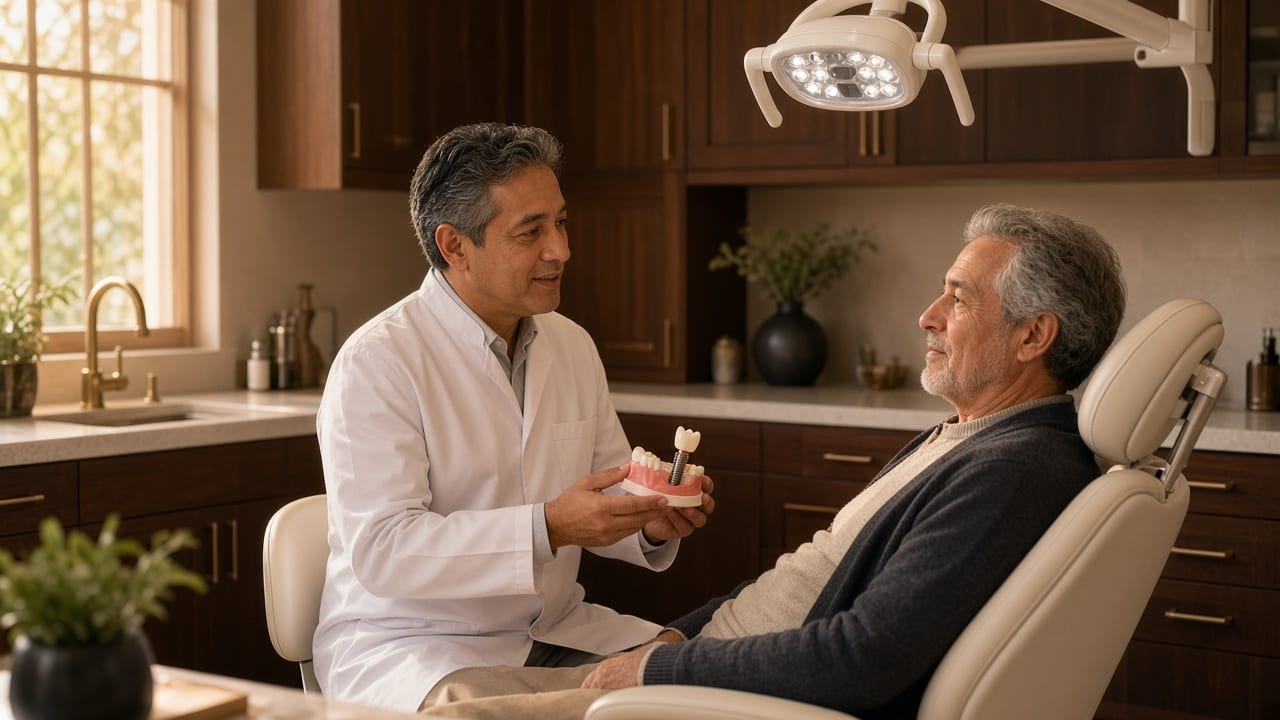
It may help to picture an implant as three parts working together.
The implant post. This is the titanium anchor placed in the jaw. Once it has integrated with the bone and remains healthy, it is often the longest-lasting part of the system.
The abutment. This small connector joins the post to the crown. It is not visible and rarely needs attention, though it can occasionally be tightened or replaced.
The crown. This is the porcelain or ceramic tooth you see and chew with. Like any dental crown, it takes the daily wear of chewing. Some crowns last a very long time and others are replaced sooner, depending on bite forces, habits, and materials.
Replacing a worn crown is a normal part of the implant journey, not a sign that something has gone wrong. It is usually far simpler than replacing a tooth from scratch, and it is one reason many patients from Burbank and Glendale choose implants over a traditional bridge or removable denture. Our dental implants page walks through our approach in plain language, including All-on-4 full-arch restorations for patients who are missing most or all of their teeth.
Daily care and checkups that protect your implant
The good news is that implant care looks very familiar. The ADA recommends brushing twice a day with fluoride toothpaste and cleaning between your teeth daily, and those same habits apply to implants. An implant cannot develop a cavity, but the gum and bone around it can still become inflamed if plaque builds up.
A few practical points we share with patients:
- Use a soft-bristled brush and gentle technique around the gumline.
- Clean between teeth every day. Floss, interdental brushes, or a water flosser can all work, and we are glad to show you what suits your restoration best.
- Keep up with professional cleanings. Your hygienist uses instruments designed for implant surfaces and checks the tissue around each implant.
- Tell us about changes in your health, medications, or habits, including clenching at night.
At routine visits we look at gum color and firmness, check for bleeding or swelling, assess how the restoration fits your bite, and take periodic X-rays to watch the bone level. Catching a small change early is almost always easier and more comfortable to address than waiting.
Warning signs worth a call to our Pasadena office
Implants are generally quiet and comfortable. Still, it is worth calling us if you notice any of the following:
- Redness, tenderness, or swelling in the gums around an implant
- Bleeding when you brush or floss near the implant
- A crown or implant that feels loose or shifts
- A change in how your teeth come together when you bite
- Persistent discomfort, a bad taste, or discharge near the implant
These signs do not always mean something serious. Inflammation around an implant that is caught early is often easier to manage, usually with a closer look, improved cleaning, and a professional visit, which is why we would rather see you sooner than later. If an implant needs more attention, we explain the options clearly, with no pressure. Patients driving in from Altadena or Eagle Rock sometimes ask whether they should wait for their next cleaning. Our answer is always the same: if something feels different, call us and we will find a time to see you.
Questions to ask your implant dentist
Choosing who places and restores your implant is as important as the implant itself. Whether you meet with us or another practice, these questions are reasonable to ask:
- What are your credentials and training in implant dentistry? Dr. David Shirinian is a USC School of Dentistry graduate and a Fellow of both the American Academy of Implant Dentistry and the International Congress of Oral Implantologists.
- Will the same team place and restore the implant? Continuity matters when planning for the bite and the final crown.
- What materials and implant systems do you use, and why?
- What does follow-up care look like? Ask how often you would be seen and what a maintenance plan includes.
- How do implants compare with a bridge or dentures for me? A thoughtful dentist will explain how each option would likely hold up in your situation, not just recommend one.
At our Pasadena office near Colorado Boulevard, we place and restore implants and take the time to walk through those comparisons. We also offer sedation dentistry for patients who prefer a more relaxed visit.
It is also wise to read what other patients say. Both Yelp and Google Business Profile reviews can be useful, and in California many people check both. Look for patterns rather than single comments: how patients describe being listened to, how clearly treatment was explained, and how follow-up was handled. You can find our practice on Google Maps, Apple Maps, and Yelp, and we invite you to read patient reviews there as you compare your options.
Frequently asked questions
How long do dental implants last on average?
There is no single number that fits everyone, but the typical range described above is a useful starting point: the post is built for the long term, and the crown may need replacing after a decade or more. What often makes the biggest difference is follow-up. Regular checkups let us spot small changes in the gums, bite, or bone early, so we can address them while they are simple.
Can an implant fail, and what happens if it does?
Implants can run into problems, most often from infection of the gum and bone around the implant, bone loss, or a bite that places too much force on the restoration. When concerns are caught early, many can be treated with deeper cleaning, bite adjustment, or other conservative care. If an implant does need to be removed, we discuss the options for replacing it openly and without pressure.
Is there a dentist near Pasadena who can place and maintain my implants?
Yes. Our office on East Colorado Boulevard in Pasadena places and restores implants, and many patients travel from South Pasadena, Altadena, Glendale, and Burbank. We also provide the ongoing cleanings and checkups that help protect them. You can find us on Google Maps, Apple Maps, or Yelp, and read patient reviews on Yelp and Google Business Profile before you visit.
Talk with our Pasadena implant team
If you are considering implants, or already have them and want a second set of eyes on their health, we welcome your questions. Please contact us at our Pasadena or Burbank office, or our sister office in Glendale, and our team will help you find a time that works. We will listen, explain every option in plain language, and make the visit comfortable from start to finish.