When missing teeth, worn enamel, decay, and sore gums have built up over the years, a single filling or crown rarely feels like enough. If that sounds familiar, full mouth reconstruction may be worth understanding. At our Pasadena office on Colorado Boulevard, we take the time to explain what a coordinated plan involves and whether it fits your situation, with no pressure to decide.
This guide covers what full mouth reconstruction is, who tends to benefit, which treatments may be part of a plan, and the questions worth asking any dentist before you commit.
What full mouth reconstruction means
Full mouth reconstruction is not one procedure. It is a coordinated, personalized plan that looks at the function, health, and appearance of the teeth and gums together, rather than treating each problem as a separate quick fix. The building blocks are familiar restorative treatments such as fillings, crowns, bridges, and implants. What makes a plan a reconstruction is how those treatments are sequenced around one another.
The plan can be broad or fairly focused. One patient may need work on both arches. Another may need a smaller number of well-sequenced treatments that restore a stable bite. What the plans share is a whole-mouth view: how the teeth meet, how the gums support them, how the jaw functions, and how the smile looks in everyday life.
That is why the same term can describe very different treatment paths. The goal is a plan designed around you, not a one-size-fits-all treatment.
Signs it may be time to look beyond a simple fix
Many people live with dental problems for a long time because each one seems manageable on its own. Together, they can affect more than your appearance. They may change your bite, your comfort, and your oral health overall.
Missing teeth
Gaps affect chewing and can leave neighboring teeth carrying extra load. Over time, teeth next to a gap may shift. Replacing missing teeth is often a central part of a reconstruction plan. Dental implants are one option for replacing teeth, and your dentist can explain how they compare with bridges or dentures for your situation.
Severe or recurring decay
Tooth decay is common, but advanced decay can undermine a tooth’s structure. The National Institute of Dental and Craniofacial Research explains how decay progresses and why early care matters. When many teeth are affected, restoring them in a planned order can make more sense than repairing them one at a time.
Worn or damaged teeth
Teeth can wear down from grinding, clenching, acid, or years of use. The Mayo Clinic notes that teeth grinding, known as bruxism, can wear teeth down and may be linked to jaw soreness and headaches. Worn teeth can look shorter, feel sensitive, and change how your bite comes together.
Ongoing gum problems
Healthy gums and bone are the foundation for any restoration. According to the NIDCR, gum disease is caused by bacterial plaque and can progress if untreated. For that reason, gum health is usually addressed early in a plan, before cosmetic or restorative work begins.
If you recognize yourself in more than one of these, nothing is wrong with you. It simply means a thoughtful, whole-mouth view may serve you better than another patch.
Who asks about full mouth reconstruction in Pasadena
Patients usually come to us after several concerns have accumulated: a few missing teeth, crowns that have worn out, gums that feel tender, a bite that no longer feels right. Some live along East Pasadena’s Colorado Boulevard and appreciate having a team close to home for a plan that may take several visits. Others drive in from Altadena because they would rather have one team look at the whole picture than piece together care from several offices.
Not everyone with these concerns needs a full reconstruction. Some patients are well served by a few targeted treatments. Dr. David Shirinian will tell you plainly which category you fall into, and why. Our approach is to recommend what your mouth needs, and nothing more.
Treatments that may be part of your plan
Because needs vary, no two plans look the same. These are treatments that often appear, described in plain language.
- Dental implants and All-on-4. Implants replace the root of a missing tooth and support a crown, bridge, or denture. For patients missing most or all of their teeth in an arch, All-on-4 full-arch restorations use a small number of implants to support a full set of replacement teeth. The Mayo Clinic offers a clear overview of what implant surgery involves, and we are glad to talk through whether it suits you.
- Crowns and bridges. Crowns cover and protect a damaged tooth. Bridges replace missing teeth by anchoring to neighboring teeth or implants.
- Gum care. Treatment for gum disease helps create a healthy base for everything that follows.
- Root canals and oral surgery. When a tooth is infected or cannot be saved, these treatments address the problem before restoration begins.
- Cosmetic refinement. Porcelain veneers, whitening, or Invisalign clear aligners can refine the look and alignment of the smile once the foundation is healthy.
The order matters as much as the list. A good plan sequences health first, then function, then refinement, so each stage supports the next.
What a consultation at Signature Smiles looks like
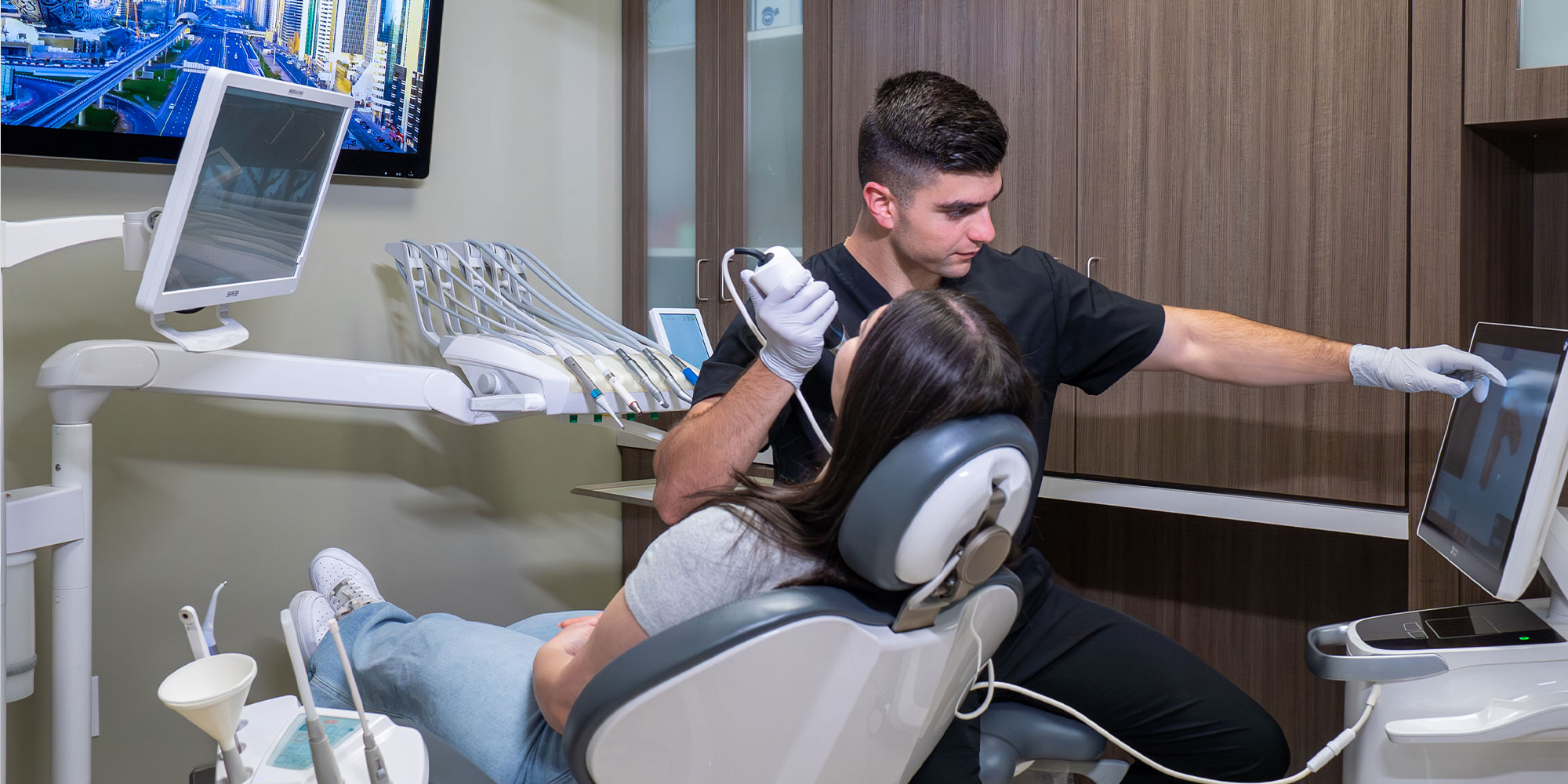
We want your first visit to feel comfortable and informative, never like a sales conversation. Dr. Shirinian, a USC School of Dentistry graduate and Fellow of the American Academy of Implant Dentistry and the International Congress of Oral Implantologists, leads each consultation. He is also a member of the American Academy of Cosmetic Dentistry, so function and appearance are considered together.
Here is what you can expect:
- We listen first. We ask about your concerns, your history, and what you hope your smile will feel and look like.
- We look at the whole picture. That includes your teeth, gums, bite, and jaw.
- We explain your options. We describe each treatment in plain language and discuss simpler alternatives where they make sense.
- We set a pace that suits you. Some patients prefer to phase treatment over time, and that is perfectly reasonable.
If dental visits make you anxious, ask us about sedation dentistry. Comfort is part of the plan, not an afterthought.
Questions to ask any dentist about a reconstruction plan
Whether you choose our practice or another, a significant investment deserves clear answers, and a dentist who welcomes these questions is a good sign.
- Scope: Which teeth and tissues does the plan address, and why those?
- Sequencing: What happens first, and what depends on what?
- Timeline: How many visits should I expect, and over what period?
- Materials: What are my options for crowns, bridges, or implant restorations, and how do they differ?
- Long-term care: How will I maintain the results, and what follow-up do you recommend?
- Alternatives: Is there a simpler approach that would meet my goals?
Understanding cost and insurance
Cost is a real part of the decision, and we want you to understand it before treatment begins. Dental plans differ widely, and many have an annual maximum and a benefit year, which for some plans ends on December 31. It is worth asking your plan administrator how yours works. Because a reconstruction plan can be phased, we can help you see which parts of treatment might fit within your benefits and which may be better scheduled later.
Our team can walk you through coverage questions and insurance and financing options, so you have a clear picture and no surprises. We do not promise coverage outcomes, since every plan is different. If you would like guidance tailored to your situation, contact our team and we will be glad to help.
Finding us in Pasadena and Burbank
Choosing a dentist for a major plan is a personal decision, and it helps to do some homework. You can look up Signature Smiles Dental Group on Google Maps, Apple Maps, or Yelp to find our offices, get directions, and read what patients have shared. We encourage you to read our reviews on both Google and Yelp, and to ask us about anything that comes up.
Our Pasadena office is at 2335 E Colorado Blvd, a short drive from Old Town Pasadena and the Rose Bowl. If you work near the Burbank studios or live in Magnolia Park, our Burbank office at 2114 N Glenoaks Blvd may be the more convenient place to start, and patients in Glendale can also ask about our sister office there. When you are ready to talk, we will help you find a time that works.
Frequently asked questions
How do I know if I need full mouth reconstruction or just a few treatments near Pasadena?
It depends on your teeth, gums, and bite. At our Pasadena office, Dr. Shirinian begins with an exam and a conversation about your goals, then explains whether a full plan or a smaller set of treatments fits best. For some patients, a more focused approach is enough, and we will tell you if that is the case.
Does full mouth reconstruction always mean replacing all my teeth?
No. The term describes a coordinated plan, and the scope varies widely. Some patients need treatment on only a portion of their teeth, while others need broader work. Your plan should be designed around your needs, and we will explain why we recommend each step.
How long does full mouth reconstruction take?
Timelines vary with the treatments involved, your gum and bone health, and your preferences for pacing. Some plans are phased over several months or longer. At your consultation we will outline an expected sequence and talk through what is realistic for you, without guaranteeing a specific result or timeframe.
Start with a conversation
If you are ready to talk through your options, we invite you to schedule a consultation at our Pasadena or Burbank office, or contact us with any questions first. We will listen, explain, and build a plan designed around you.