How Are Dental Implants Installed? Your Step-By-Step Guide

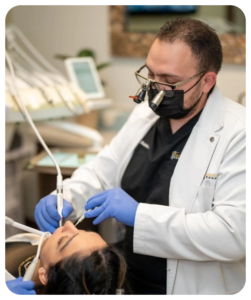
Photo of a dentist in a surgical mask carefully placing a dental implant into a patient's jawbone. The image should highlight the precision and technology involved in the procedure. No text on image.

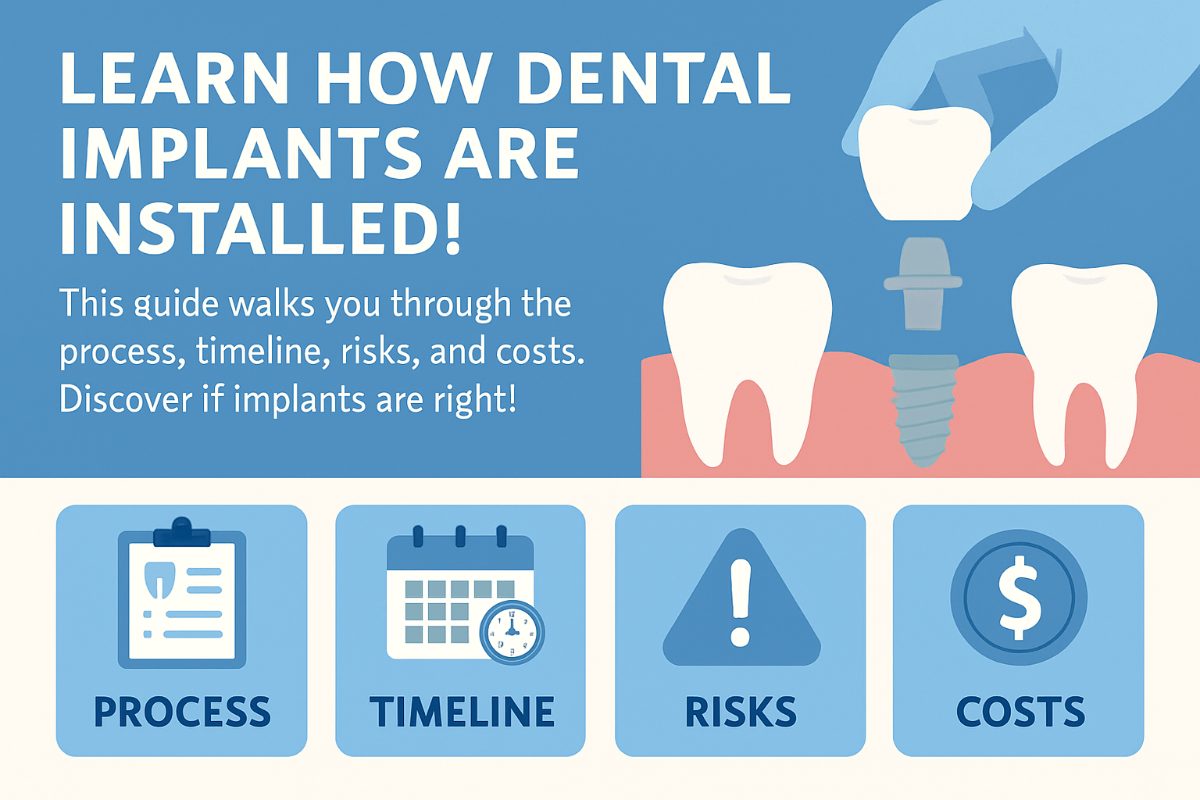
Dental implants are small titanium posts that replace tooth roots and hold lifelike crowns. If you’re reading to learn how dental implants are installed, this clear step-by-step guide will walk you through the process, timeline, risks, and costs so you can decide if implants are right for you.

What is a dental implant?

A dental implant has three parts: the implant (a titanium screw placed in the jawbone), the abutment (which connects the implant to the crown), and the crown (the visible tooth). Together, they replace both the root and the tooth, restoring chewing function and appearance.

Who is a good candidate?

Good candidates are generally healthy, have healthy gums, and a sufficient jawbone. Smoking, uncontrolled diabetes, or severe bruxism (teeth grinding) can affect success. Older age alone is not a barrier; your dentist will review medical history, gum health, and bone volume before recommending implants.

Before surgery: planning and imaging

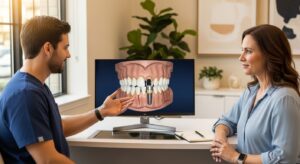
Your implant journey starts with a consult and exam. Dentists use digital X-rays, CBCT 3D scans, and intraoral scans to map nerves, sinuses, and bone. These images guide precise placement and let the team explain options like single implants, bridges, or full-arch solutions.

Step 1: Tooth extraction and site preparation (if needed)

If a damaged tooth must be removed, the dentist may first extract it. Some sites need bone grafting or a sinus lift to build enough bone for a stable implant. These procedures add healing time—often several months—before the implant can be placed.

Step 2: Placing the implant

The surgical visit

The implant procedure is usually done in the office with local anesthesia and optional sedation. The dentist makes a small incision, drills a hole in the jawbone, and places the titanium implant. The site is closed with sutures, and you go home the same day.

Immediate vs. delayed loading

Sometimes a temporary crown is attached the same day (immediate loading) for front teeth or select cases. More often, the implant is left to heal before attaching a tooth (delayed loading). Your dentist chooses the safest option based on bone quality and stability.

Step 3: Healing and osseointegration

Over weeks to months, bone grows around the implant in a process called osseointegration. Expect mild swelling and soreness initially. Most patients return to normal activity within days, but full bone integration typically takes 3–6 months.

Step 4: Abutment and crown placement

Once healed, the abutment is attached, and digital impressions are taken. A custom crown is fabricated and cemented or screwed onto the abutment to match the color and shape of nearby teeth, restoring bite and smile.

Risks, pain, and recovery

Common side effects include swelling, bruising, and mild pain, which can be controlled with medication. Complications can include infection, implant failure, or nerve irritation. Good oral hygiene, quitting smoking, and following post-op instructions reduce risks.

How dental implants are installed: typical timeline and costs

From consult to final crown, the process can take 3–9 months, depending on extractions and grafts. Costs vary by number of implants, grafting needs, implant brand, and lab work. Financing plans can help make treatment manageable. If you’re searching for how dental implants are installed in Pasadena, CA, or in Burbank, CA, ask about bundled pricing and financing options.

Why choose Signature Smiles Dental Group for implants

Signature Smiles Dental Group offers concierge-style care, with Dr. David Shirinian’s expertise in implants. The practice uses CBCT, iTero digital scanning, dental lasers, and in-house 3D printing for precise, comfortable treatment and faster turnaround times.

Next steps: scheduling a consultation

To book a consult, call or book online, and bring a list of medications, medical history, and any recent dental records or x-rays. Ask about success rates, implant brands, timelines, costs, and financing. A clear plan will help you feel confident about moving forward.

Share:

More Posts

Judgment-Free, High-Quality Dentistry is Possible

Experience it for yourself!