A small chip or a faint line on a tooth is easy to brush off, especially in a busy week. But a crack can be more than a cosmetic annoyance. If you are looking for a cracked tooth dentist in Pasadena, our office on Colorado Boulevard is here to take a careful look, explain what we see in plain language, and help you decide what comes next. Neighbors across Pasadena and Burbank often ask us the same question: is this serious, or can it wait?
The honest answer is that it depends on the crack, and the only way to know is to have it evaluated. Here is what we want our neighbors to understand, without fear and without pressure.
Why a small crack is not always a small problem
Every tooth has a hard outer layer of enamel, a softer layer of dentin beneath it, and an inner core called the pulp, which holds nerves and blood vessels. A crack that stays in the enamel may be little more than a surface concern. A crack that travels deeper can give bacteria a pathway to the inner tooth, which may lead to irritation, infection, pain, and a more involved treatment plan.
The American Association of Endodontists explains that cracked teeth can look and feel very different from one person to the next, and that the right treatment depends on the type, location, and extent of the crack. That is why we do not guess from the outside. A tooth that looks nearly perfect can have a problem below the surface, and a dramatic-looking chip can turn out to be straightforward to repair.
Common types of cracked and broken teeth
Dentists generally sort cracks into a few categories, and they are managed quite differently:
- Craze lines: tiny, shallow lines in the enamel. They are common in adult teeth and are usually cosmetic.
- Chipped or fractured cusps: a piece of the chewing surface breaks away. This often causes little pain but can leave the tooth rough or sensitive.
- Cracked teeth: a crack that extends from the chewing surface toward the root, sometimes reaching the pulp.
- Split teeth: a crack that has progressed until the tooth separates into distinct segments.
- Fractures below the gum line: cracks that begin in the root and may show few early signs. These can be hard to detect without careful imaging.
A craze line may only need to be monitored. A split tooth or a deep root fracture is a different conversation entirely. Knowing which one you have is the foundation of a good plan.
Warning signs patients often notice
Cracks do not always hurt, which is part of why they get ignored. The Mayo Clinic notes that symptoms can come and go. Many patients first notice one or more of these:
- Sensitivity to hot, cold, or sweet foods and drinks
- Pain when biting down, or a sharp zing when you release the bite
- Discomfort that comes and goes, then seems to disappear for weeks
- A rough edge that catches your tongue
- Soreness near one tooth that is hard to pinpoint
Intermittent pain can be misleading. A tooth that quiets down has not necessarily healed.
Some symptoms mean you should call us right away: swelling in the face or gums, a pimple-like bump on the gums, pain that lingers or keeps you awake, fever, or a tooth that has broken with sharp, jagged edges. We will do our best to see you promptly. If swelling affects your breathing or swallowing, seek emergency medical care.
What to expect from a cracked tooth dentist in Pasadena
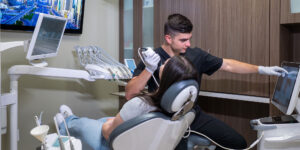
At Signature Smiles Dental Group, an evaluation begins with a conversation. We ask when you first noticed the problem, what makes it better or worse, whether you clench or grind your teeth, and what you have been eating lately. You should never feel rushed through this part.
From there, Dr. David Shirinian performs a careful exam and takes the imaging needed to see what the eye cannot. Cracks are not always visible on an X-ray, so the full picture often comes from combining your history, a close look at the tooth, bite testing, and imaging. The Mayo Clinic's overview of diagnosis and treatment describes a similar approach.
Then we explain what we see before any treatment is discussed. You will know the type of crack, how deep we believe it goes, and which options are reasonable. If dental visits make you anxious, tell us. Sedation dentistry is available at our practice, and we would much rather make you comfortable than have you put off care.
Restorative options for a cracked tooth
There is no single answer. Our goal is the most conservative treatment that will reliably protect the tooth. Depending on the findings, the options we discuss may include:
- Bonding: tooth-colored material shaped onto a small chip or rough area, often the simplest repair for minor damage.
- Porcelain veneers: a thin porcelain shell that can restore the look of a chipped front tooth, improving its shape and color.
- Dental crowns: a custom cap that covers the tooth and holds it together, often recommended when more of the tooth is compromised. The ADA's MouthHealthy page on crowns offers a plain-language overview.
- Root canal therapy: when a crack has reached the pulp, treating the inside of the tooth can remove the source of infection and pain, and a crown typically follows. The American Association of Endodontists provides a helpful patient explanation of the procedure.
- Extraction and a dental implant: when a tooth has split or fractured below the gum line, saving it may not be predictable, and replacing it can be the more dependable long-term choice.
Implant dentistry is a core part of what we do, and our dental implants care is offered at the Pasadena office. Patients considering this route often ask about the timeline and how the replacement tooth will look. If several teeth are compromised, we can also discuss broader solutions such as full mouth reconstruction. We will never recommend removing a tooth that can be saved with a reasonable, lasting repair.
Why early evaluation helps
In general, the earlier a crack is found, the more options you tend to have. The AAE's guidance on cracked teeth stresses that prompt attention gives the best chance of keeping a tooth. A small crack may be managed with bonding or a crown. The same crack, left to travel deeper, may require a root canal as well, or may no longer be savable. We cannot promise an outcome in any individual case, but earlier evaluation usually keeps treatment simpler and more conservative.
A few everyday habits can stress a tooth that is already weakened, and the holiday season brings some of them to the surface:
- Hard candies, toffee, and nuts in the shell, which show up in every holiday tin
- Chewing ice, a frequent cause of chips and cracks
- Nighttime grinding or clenching, where repeated force can fracture teeth over time. A custom night guard is one option we may discuss if we see signs of it.
Timing matters for coverage too. Many dental plans reset on December 31, so it is worth checking what remains in your plan year before it does. Our team helps patients understand their benefits and options, and you can read more on our insurance and financing page. Your plan documents and insurer are the final word on what is covered.
Questions to ask your dentist about a cracked tooth
A good consultation should leave you feeling informed. These questions are worth bringing with you:
- How deep is the crack, and how did you determine that?
- Can the tooth be saved, and what is the long-term outlook?
- What are the alternatives, and what are the trade-offs of each?
- What happens if I wait, and is there a safe timeline?
- What comfort or sedation options are available if I am nervous?
We welcome every one of these questions, and we would rather you ask than wonder.
Finding us in Pasadena and Burbank
Our Pasadena office is at 2335 E Colorado Blvd, a short drive along Colorado Boulevard from Old Pasadena and just off the 210 for patients coming from Altadena and Arcadia. Our Burbank office is at 2114 N Glenoaks Blvd, convenient for families from Magnolia Park and Toluca Lake. Many Glendale patients choose whichever office fits their commute.
If you are searching for a cracked tooth dentist in Pasadena, you can find us on Google Maps, Apple Maps, and Yelp. We invite you to read recent patient reviews on Yelp and our Google Business Profile and see whether we feel like the right fit.
Frequently asked questions
How do I know if I need a cracked tooth dentist near Pasadena right away?
Call promptly if you have swelling in the face or gums, a bump on the gum, pain that lingers or wakes you at night, or a tooth that has broken with sharp edges. Even without those signs, sensitivity or pain when biting is worth an evaluation soon. Reach out to either office and we will make room for you as quickly as we can.
Will a cracked tooth heal on its own?
No. Unlike a broken bone, a cracked tooth does not knit itself back together, and discomfort that fades does not mean the crack has gone away. The American Association of Endodontists describes how cracks typically progress and why evaluation matters. An exam helps us determine whether the tooth needs monitoring, a restoration, or something more involved.
Does a cracked tooth always mean I will need an implant?
Not at all. Many cracks are managed with bonding or a crown, and a veneer may restore the look of a chipped front tooth. Some teeth need a root canal first. An implant becomes the more predictable choice mainly when a tooth is split or fractured too deeply to save, and Dr. Shirinian will explain each option and why he recommends it before you decide anything.
Schedule your cracked tooth evaluation
If a tooth has been bothering you, or you simply noticed a new chip while brushing, we would be glad to see you. Signature Smiles Dental Group welcomes neighbors from Pasadena, Burbank, and the surrounding communities for unhurried, comfortable care. Contact us to book a visit, and bring your questions and your insurance information so we can help from the very first conversation.