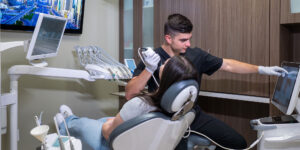

A small chip on a front tooth is easy to dismiss. Many of our neighbors in Pasadena and Burbank notice one, assume it happened on something crunchy, and move on. Sometimes that is exactly what happened. Other times, a chipped or flattened tooth is one of the first visible clues that a person grinds or clenches, often without knowing it. If you are searching for teeth grinding treatment in Pasadena, this guide explains what bruxism is, why your bite matters as much as the repair, and what an evaluation at our office typically involves.
What bruxism is and why it often goes unnoticed
Bruxism is the habit of clenching or grinding the teeth. According to the Mayo Clinic, it can happen while awake or during sleep, and many people with sleep-related grinding are unaware of it until a partner hears it or a dentist notices the effects. The Cleveland Clinic describes it similarly, as a common habit that ranges from mild and occasional to frequent enough to affect the teeth and jaw.
That is why it so often goes unnoticed. Nothing hurts on the day you clench a little harder, and the changes to your teeth build slowly. By the time the signs are obvious, the wear may have been developing for a long while.
Common signs to watch for
These are widely recognized signs, though none of them confirms grinding on its own:
- Flattened, worn, or chipped tooth edges
- Increased sensitivity to hot, cold, or sweet
- Jaw soreness or tightness, especially in the morning
- Headaches that seem to start near the temples
- Clicking or discomfort in the jaw joints
- Small cracks or notches near the gumline
If several of these sound familiar, it is worth a conversation. An evaluation is how we tell the difference between ordinary wear, an unrelated problem, and a grinding habit that deserves attention.
Why stress and busy routines matter
The Mayo Clinic notes that bruxism is commonly associated with stress and anxiety, among other factors. We want to be careful here: stress is context, not a diagnosis. Plenty of people grind for reasons that have nothing to do with how their week is going, and plenty of stressed people never grind at all.
Still, the rhythm of life around here is worth acknowledging. Busy seasons bring full calendars, travel, and family obligations. Work in Burbank, Glendale, or the Media District can come with long days and tight deadlines. A daily crawl along the 134 or the 210 gives the jaw plenty of chances to tighten without a conscious thought. Many patients tell us they catch themselves clenching at a red light or while staring at a screen.
We do not suggest that you can simply relax your way out of a grinding habit. We do suggest paying attention, because noticing the pattern is the first step toward protecting your teeth.
Why fixing the chip is not always enough
A chipped tooth can often be repaired with bonding, a porcelain veneer, or a crown. These are reliable ways to restore the look and function of a tooth, and cosmetic repair is a large part of what we do.
But a repair addresses the result, not the cause. If grinding or an uneven bite is putting excessive force on that tooth, the same forces can chip new bonding, stress a veneer, or fracture a crown. That is why we look at the whole bite rather than a single tooth.
This matters even more if you have already invested in your smile. Patients across East Pasadena, Altadena, and San Marino come to us with veneers, crowns, bridges, or dental implants they want to last. Implants respond to bite forces differently than natural teeth do, so heavy clenching deserves thoughtful planning. Protecting that work is often a smarter long-term step than repeatedly repairing it.
What teeth grinding treatment in Pasadena starts with: a bite evaluation
An evaluation should feel unhurried and clear. At our Pasadena office on Colorado Boulevard, and at our Burbank office on Glenoaks Boulevard, it typically includes the following.
A conversation about your symptoms
We start by listening. We ask about morning jaw soreness, headaches, sensitivity, and whether anyone has heard you grinding at night. We also ask about your daily routine, because daytime clenching is easier to spot when we understand how you spend your day.
An exam of wear patterns and the jaw joints
We look at how your teeth meet, where wear has occurred, and whether existing restorations show stress. We also gently check the muscles and jaw joints for tenderness or irregular movement. We explain what we see in plain language, and we are happy to show you.
Imaging when it is useful
Sometimes x-rays or other imaging help us look beneath the surface, at tooth roots, bone, and the joints. We recommend imaging when it will answer a real question, not as a routine add-on.
A clear conversation about next steps
You leave knowing what we found, what is most likely contributing, and what your options are, with no pressure to decide that day.
Protective and restorative options to discuss
There is no single answer for everyone, and any recommendation depends on your exam. The Mayo Clinic's page on bruxism diagnosis and treatment describes approaches such as splints or mouth guards, dental correction for worn teeth, and managing stress or anxiety. In practice, the options we discuss include:
- Custom night guards. A guard made for your mouth creates a protective barrier between the teeth. Fit and comfort matter, which is one reason dentists often favor custom guards over over-the-counter versions.
- Repairing worn or chipped teeth. Bonding, veneers, or crowns can restore damaged teeth, ideally alongside a plan to protect them from the forces that caused the damage.
- Addressing specific bite problems. If an exam shows a particular bite issue, such as a single high restoration, we would discuss whether a targeted correction makes sense. Permanent changes to the bite are not a routine first step. The National Institute of Dental and Craniofacial Research advises starting with conservative, reversible care for jaw joint and muscle problems and cautions against irreversible treatments, so we approach this option carefully and only when the findings point to it.
- Further assessment for TMJ concerns. If you have persistent jaw pain, clicking, or trouble opening and closing comfortably, that deserves a closer look, and we can talk through what is appropriate for you.
If a larger restorative plan makes sense, such as replacing several worn teeth, we map it out carefully so the result is both beautiful and built to withstand your bite. That is the heart of good teeth grinding treatment in Pasadena or anywhere else: protection first, then restoration that is designed with your bite in mind.
Questions to ask your dentist
Whether you see us or another provider, these questions help you feel informed:
- How severe is the wear on my teeth, and is it still progressing?
- Is a night guard right for me, and what type do you recommend?
- How can I protect the veneers, crowns, or implants I already have?
- Are there signs of a jaw joint issue that need further assessment?
- What does a realistic long-term plan look like, and how would we monitor it?
For questions about coverage and payment, our team is glad to walk you through what the office can help with before you commit to anything.
How to find us and what to expect
When you are choosing a dentist, we encourage you to do your homework. You can find Signature Smiles Dental Group on Google Maps, Apple Maps, and Yelp, where you can read patient reviews, see our Pasadena and Burbank locations, and get directions from wherever you are, whether that is Old Pasadena, Hastings Ranch, Downtown Burbank, or Magnolia Park. Reviews on our Google Business Profile and on Yelp reflect real patient experiences, and we think they are a valuable part of making a confident choice.
Our Pasadena office is where many patients from South Pasadena, Arcadia, and La Cañada Flintridge come to ask about grinding, worn teeth, and protecting cosmetic work. Our Burbank office is just as welcoming for families coming from Toluca Lake and North Hollywood.
Frequently asked questions
How do I know if I need teeth grinding treatment near Pasadena?
The most reliable way is an evaluation. Chipped or flattened teeth, morning jaw soreness, new sensitivity, and frequent headaches are common signs, but they can have other causes. At our Pasadena office, we examine your teeth and jaw joints, talk through your symptoms, and tell you plainly whether grinding appears to be a factor.
Will a night guard stop me from grinding?
A night guard generally does not stop the habit itself. Its purpose is to protect your teeth and restorations from the forces of grinding or clenching. Whether one is right for you depends on your exam, your symptoms, and your existing dental work, which is something we would discuss together.
Can grinding damage veneers, crowns, or implants?
It can place extra stress on them. Strong or uneven bite forces may contribute to chipping, loosening, or wear on restorations over time, which is why we look at the bite as well as the individual tooth. We cannot promise any particular outcome, but a thorough evaluation helps us reduce avoidable risk.
Protect your smile with a careful evaluation
If you have noticed a chip, a flattened edge, or a jaw that feels tired when you wake up, we would be glad to take a careful look. Schedule a consultation at our Pasadena or Burbank office, or contact us with any questions first. We will listen, explain what we find in plain language, and help you protect your smile for the long term.